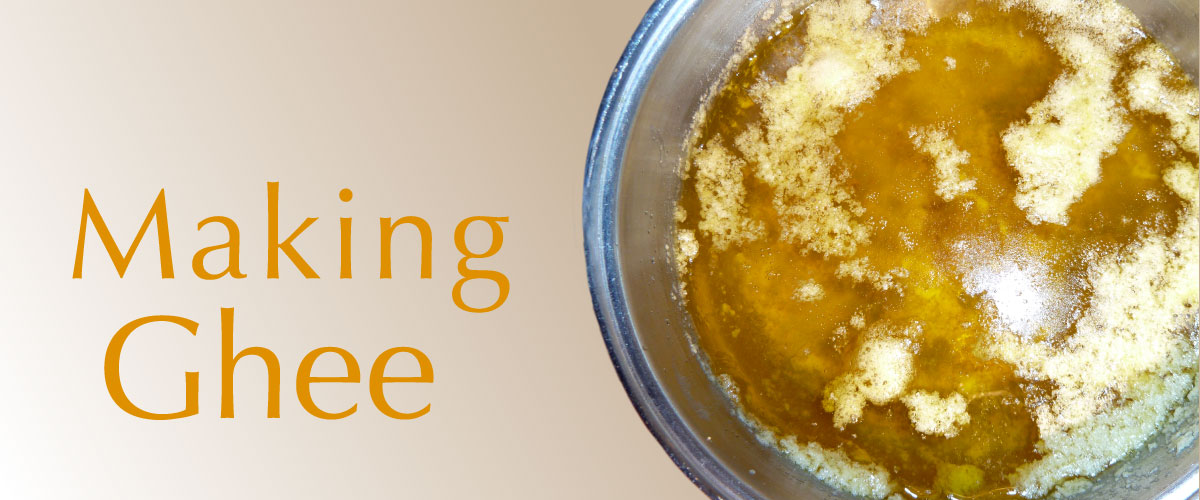
Ayurveda knows Ghee – clarified butter – both as a remedy and a food. Ayurveda utilizes the beneficial qualities of Ghee in internal as well as external treatments. Ghee is an indispensable part of this oldest art of healing and, along with milk and honey, is considered a natural Rasayana, i.e. an Ayurvedic preparation for prevention, strengthening and rejuvenation. Continue reading
Blog – Ayurveda tips for at home
Making Ghee
Making your own Ghee is easy, but you need to give it some time and attention. The butter has to be boiled long and gently to release its subtle nutty aroma. The suggestion is to do this on the side, while you’re preparing a meal or doing chores, but close enough that you can monitor the process. Continue reading

Why hot water works wonders
Even if it is unusual for us: drinking hot water is an effective medicine for many diseases. Since thousands of years, Ayurveda knows that hot water is a cornerstone for long-lasting good health. We recommend boiling the water for ten minutes. You can boil enough water for the day in the morning and keep it in a thermos (or several) so you always have hot water at hand, including while traveling. Continue reading
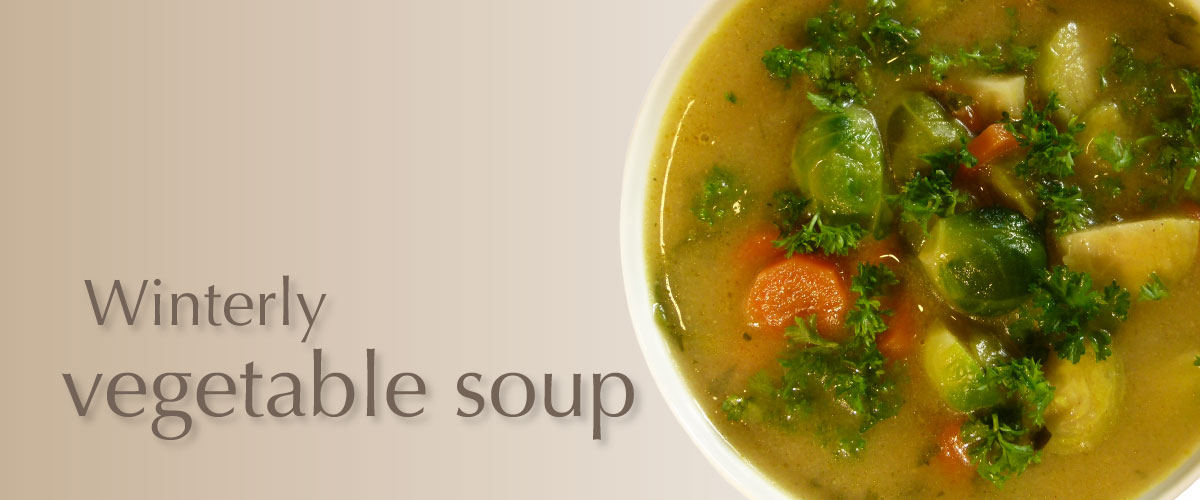
Winterly vegetable soup
Although this winterly vegetable soup is low on carbohydrates, it is quite satiating and thus really helps you lose weight.
In this recipe, we have used fennel, but this can be replaced by white cabbage or kohlrabi, e.g. if you prefer a stronger taste. Continue reading

Starting the new year with good resolutions
It’s that time again: The good resolutions for the new year have been made. As health awareness is becoming more fashionable, many fellow humans have resolved to lose weight. Often, that’s easier said than done. Continue reading
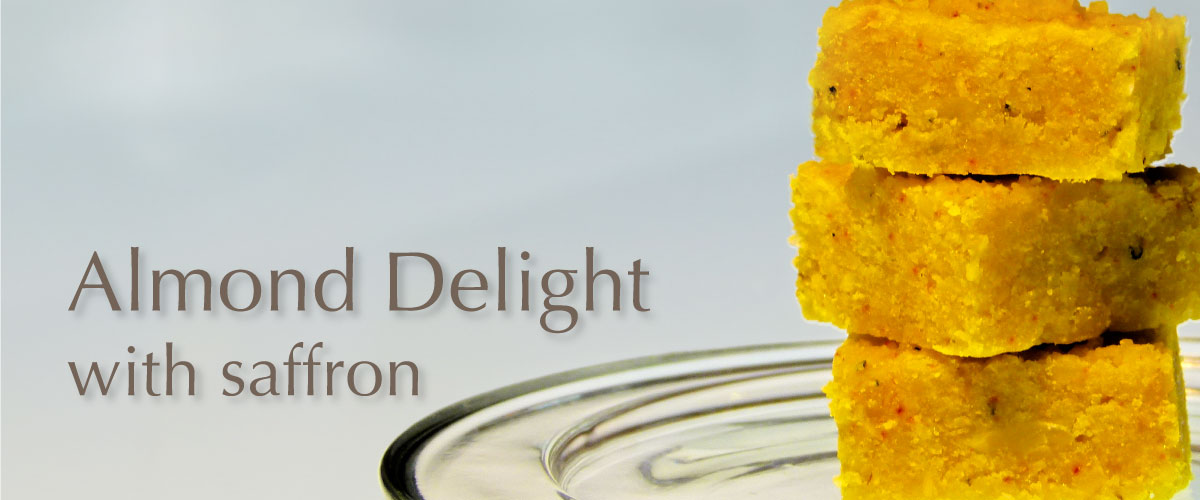
Almond Delight with saffron
Although this almond confectionery can be enjoyed year-round, it’s an especially fitting enrichment to the traditional range of Christmas Season pastries.
Continue reading
Back pain is the most common disease
Back pain is the most common disease and the second-most common reason for doctor visits in Germany. According to a survey by the Bertelsmann Foundation, around 20 percent of all insureds seek medical advice concerning back pain at least once a year. Continue reading

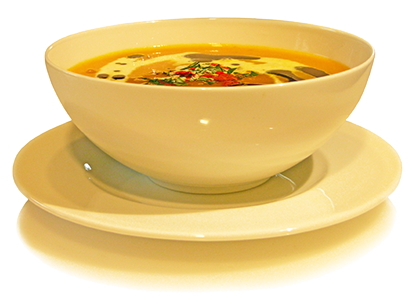
Fruity Pumpkin Soup
This pumpkin soup is mild, delicious, and warming – and it just fits well with autumn. In addition, it looks great with its sophisticated topping.
Depending on how thick you make it, this soup can be served as a main dish or as a starter.
Ingredients for 2 persons:
- 300g pumpkin
- 100g carrots
- 50g parsnip
- 1,5 L water
- 2 tbsp ghee
- 1/2 tsp. fresh ginger, grated
- 2 tsp. chickpea flour
- 1 pinch asafoetida
- 2 pinch of curcuma
- 1 bouillon cube (10g)
- Juice of half a small orange
- 1 pinch of pepper
- 1 pinch of cane sugar
- 1/2 tsp. of salt (to taste)
- For the topping:
Cream, pumpkin seed oil, fresh marjoram, flower petals
Preparation:
Peel and chop the pumpkin, carrots, and the sweet potatoes. Pumpkin (Hokkaido variety) gives a very refined taste when peeled.
- Heat the Ghee in a saucepan
- Add vegetables and stir
- Add chickpea flour and stir
- Pour in the water
- Add spices (except the pepper)
- bring to a boil
- Cook over medium heat for 35 minutes
(Until the soup has the desired thickness.) - Add the freshly pressed orange juice, the cane sugar, salt and pepper
- Blend the soup
- Fill in preheated plates or bowls, garnish with cream, pumpkin seed oil, marjoram, and flower petals and serve.
Enjoy!
If you prefer a more liquid soup, reduce the amount of pumpkin to 250g. In general, you can also regulate the thickness by adjusting the cooking time.
Recipe and Photos: Hans-Jürgen and Monika Schwarz
Texts © Maharishi Ayurveda Private Clinic Bad Ems. Image material licensed.
Download the recipe as a PDF file

Lemon and Honey Drink
If you have visited our Maharishi AyurVeda Health Centre in Bad Ems before, the doctor has given you many useful tips you can use at home. One of the simplest recipes is the lemon and honey drink, taken first thing in the morning on an empty stomach. Even if you want to have breakfast early, it’s best to wait for half an hour, to allow the drink to really unfold its beneficial effects.
Continue reading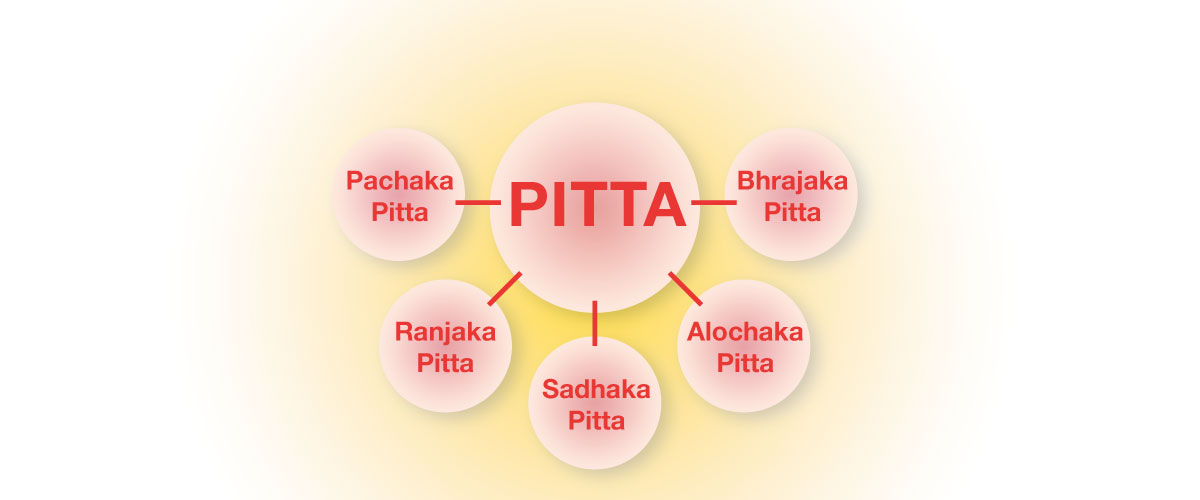
The five Subdoshas of Pitta
In this article, we will tell you a little about the five Subdoshas of Pitta, which have specific areas of influence, yet are relatively unknown among Ayurveda enthusiasts. Continue reading

Green tea – a very healthy pick-me-up
In Asia, green tea – tea from the unfermented leaves of the tea plant Camellia sinensis – has been popular for thousands of years, but it is also becoming more and more of a trend drink in Europe. In contrast to fermented black tea, it is one of the healthiest drinks, thanks to its special ingredients.
Continue reading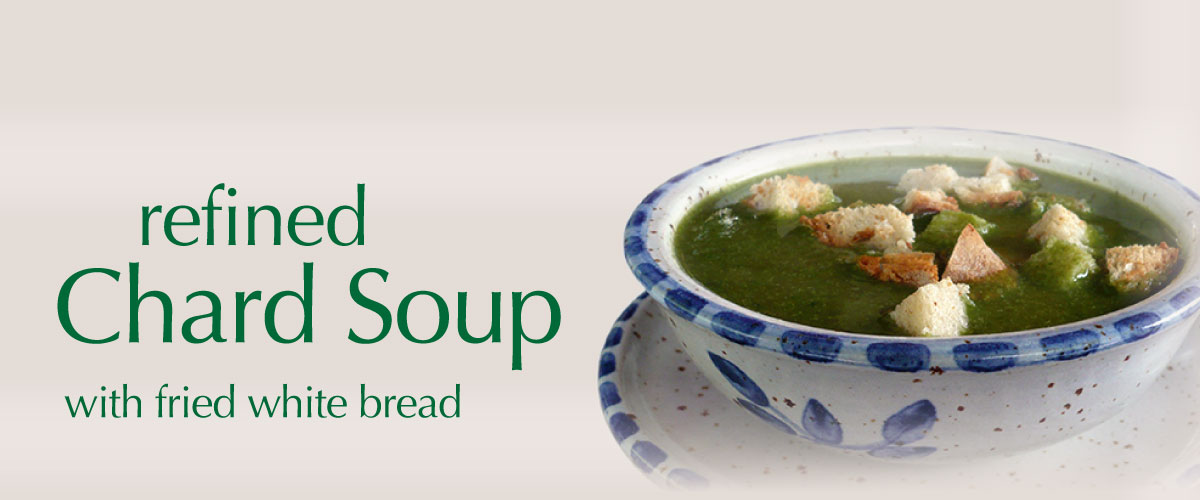
Refined chard soup recipe
Like all green leafy vegetables, chard reduces Pitta. Here is a recipe for a simple and light, yet refined chard soup that can be served for lunch or dinner.

The Government of India honors Maharishi Mahesh Yogi for his original contributions to Yoga, Meditation, and Ayurveda.
Prime Minister of India Shri Narendra Modi has honored Maharishi Mahesh Yogi and 11 other outstanding healers of India posthumously with commemorative postage stamps in a grand ceremony on August 30, 2019 at Vigyan Bhawan, New Delhi. The entire event was broadcast live throughout India by government TV, many private television channels and also through live streaming on the internet.

What you can do to restore balance when Pitta is increased:
The rule of thumb for every Ayurvedic remedy is, that all disturbances can be balanced naturally by their counterpart – restlessness through rest, inertia through activity, coldness through heat, etc.
Continue reading
travelling without stress
Long flights, delays, congestion on the highway, whining kids, large crowds … These are all causes of stress, especially when travelling and during the holiday season.
In this issue, we share some tips from Ayurveda on how to avoid stress and how to restore the imbalances that arise when you’re travelling.

Oats … an indigenous Superfood
We read a lot about superfoods, and sometimes is seems that the more exotic and remote the area from which they come, the greater the healing power attributed to them: berries from the Himalayas, grains from the Andes, seaweed from distant seas…
But do superfoods always have to come from far away? Surely not! For many generations, an extremely versatile and highly effective superfood has been growing in our own local fields: oats. Continue reading
One day of the week to unburden
Generally, Ayurveda highly recommends unburdening by liquid fasting once a week, especially for people with predominance of Pitta or Kapha Dosha. People with predominance of Vata Dosha are advised to take liquid diet days only when they feel relaxed and well-anchored. Continue reading

MAHARISHI-MARMA-THERAPY
Marma therapy is the Ayurvedic term for the therapeutic touching of Marmas, special areas and points on the skin, through which associated organ systems or bodily functions can be influenced. Marmas are interconnected through Shrotas – numerous smaller and larger channels in the physiology. Incidentally, Chinese acupuncture has its origins in the ancient knowledge about Marma points.
Continue reading
Eating in harmony with the daily rhythms according to Ayurveda
Over the course of a day, the influence of the Doshas changes. When the sun is high in the sky, the overall metabolism is more active and thus also Agni, the digestive fire.
From 6 to 10 in the morning, the slow-moving Kapha Dosha dominates. That is why breakfast should be light, so as not to burden the morning with a feeling of heaviness. Continue reading
Healthy Spring
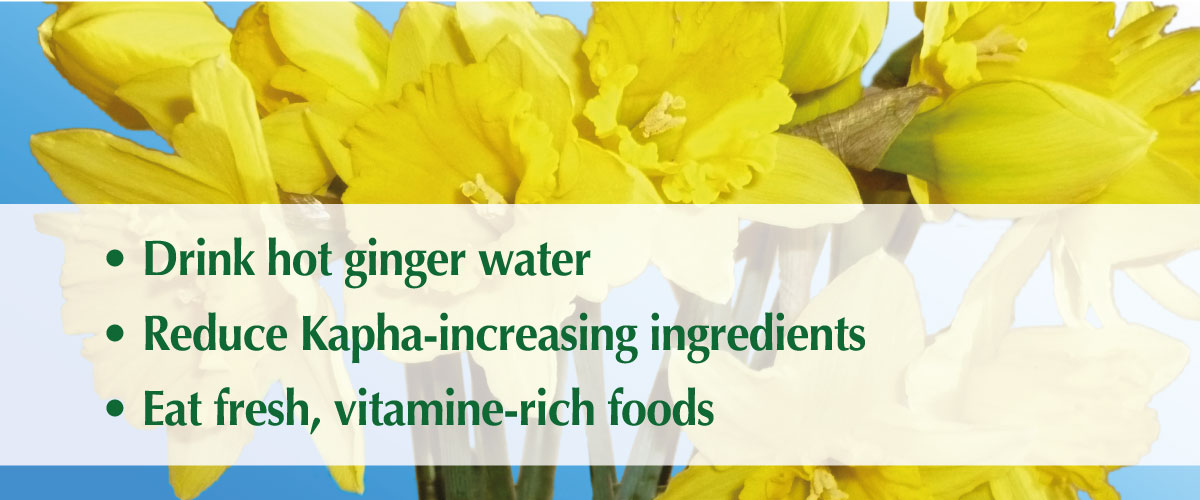
How to enjoy the spring in good health? During this time of year, when colds and flu are common, that question comes up a lot.
With the following three recommendations you can effectively balance your Kapha Dosha:
Continue reading